
Signs your foundation needs attention
Stair-step cracks in brick or block, a crack wider than a quarter-inch in the slab, doors and windows that stick or won't latch, gaps between the wall and ceiling, and floors that visibly slope are the signs we hear about most. None of these mean the house is unsafe today, but every one of them gets more expensive to fix the longer it's ignored.
How we stabilize a settling foundation
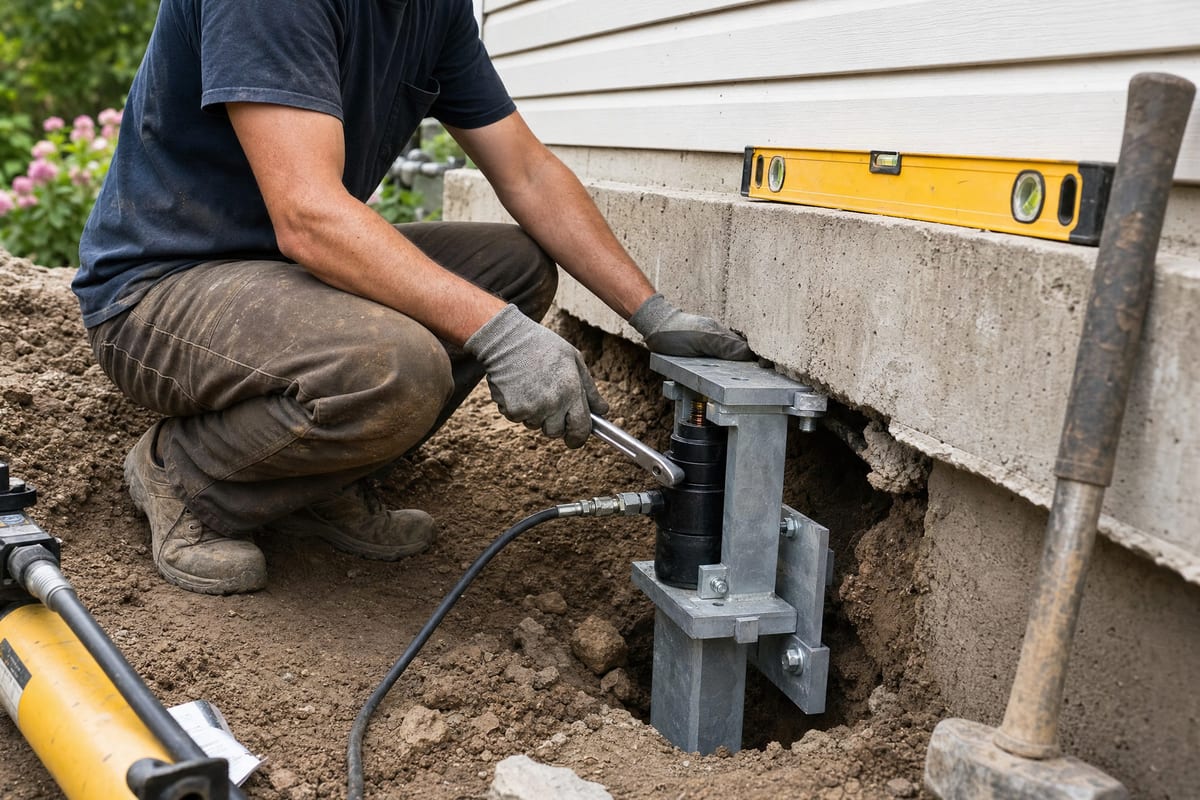
For slab and block foundations we typically use steel push piers or helical piers driven to load-bearing soil or bedrock, then transfer the structure's weight onto them and lift where it's safe to do so. For older pier-and-beam homes common around the Cookeville square, that often means resetting and shimming the existing piers or adding new concrete or steel supports under sagging joists.
Slab cracks versus structural settlement
Not every crack means the foundation is failing. Shrinkage cracks in a new slab, or hairline cracks that don't grow, are usually cosmetic and get sealed rather than piered. We measure crack width, check for step patterns, and look at the whole house before recommending piers, so you're not paying for structural work a simple seal would fix.